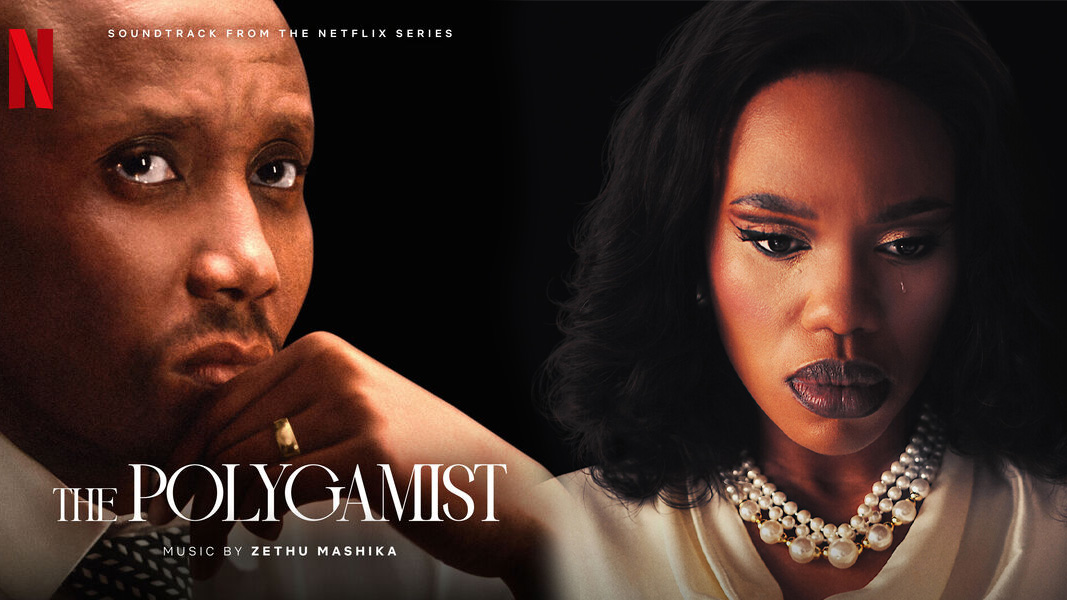
They say when you find it impossible to see the difference between an actor and their character, the actor has done a great job.
Someone's review of The Polygamist had me laughing when she said she will not bother looking for the actor's name and that he will forever remain Jonasi to her. I've stumbled on S'dumo Mtshali in a few reels and in all honesty, I feel the same. I scream Jonasi when I see him. It feels impossible to see him without remembering Jonasi's sins. But let's dig a little into this series.
First of all, I watched the dubbed version - all in English and I do not know if those characters moaned that much in the first episodes for the isiZulu version. I wanted to suggest that the series be named Mhhhhhhh. Found it annoying and now I don't know if it stopped or I just got used to it - to the point of not hearing it anymore. Secondly, I thought Joanasi is more of a casanova and not a polygamist. He only used marriage to calm down Essie’s and Matipa’s nerves.
I would like to study the different adult characters but before I do so, I'd like to put it your way that in whatever social relations you'd like to engage in, always check with your self-esteem. Your self esteem is the first friend or hater we engage with the longest before we bring in other people. Now let's dive into it.
⚰️1. The Undertaker: Magesh Gomora (Played by Kenneth Nkosi)
The boundaryless people-pleaser who buried the truth.

Before we look at the flashy tyrants and architects of this trauma, we have to look at the man who digs the graves for the family secrets. Magesh is a people-pleaser and a danger to himself. He is at his brother's behest even if it compromises societal or his personal values. Without Jonasi, Magesh swears they would still be poor—which is true—but do you have a life of your own, uncle?
What do you mean you cannot curve out your own life but happy to play husband to your brother's first love cum second wife? What in the lack of spine of a man is this?
By letting his self-esteem be completely eradicated by Jonasi’s wealth, Magesh didn’t just fail himself, he failed the children - his nieces and nephews. He normalized a grand lie. He showed the next generation that a man should willingly wear a fake ring and a fake title just to absorb a dictator's leftovers. Okay, he finally stood up for the truth, but it was too late. The damage to the family's psychological foundation was already done.
🧺 2. The Crumbs Collector: Essie (Played by Celeste Ntuli)
The mother who traded her child’s identity for a ghetto house and a car.

From Magesh’s passive enabling, we move directly to Essie—the ultimate accomplice in her own destruction. I cannot begin to imagine how much one has to hate oneself to the point of looking the other way when the love of their life cheats. Initially, I thought Essie was a sister covering up for her brother's mischievousness. It was only towards the end that I started putting some pieces together to see how much Essie's idea of loving Jonasi and her self-esteem became the weapon formed against her.
Peers growing up in the same neighborhood. Growing together. One is in school and the other isn't but they end up in a relationship whether the one who dropped out of school (and works) funds the other's continuation in school—is a dynamic that isn't new. The only difference here is that there is a gender reversal.
Thought processes that could have excited Essie: "An educated man, who is desired by many can look my way. If I give him peace and fund his education, he will choose me." Ptho!
It's even worse that he came back to her 8 years after abandoning her and seeing him married to a City girl. Essie didn't mind being Jonasi's second fiddle. A man that she loved, still thought about her even after making it. Bought her a house in the ghetto. Bought her a car. Impregnated her but couldn't recognize her child publicly—he had to ask his brother [Magesh] to claim her and their daughter.
Essie was a professional crumbs collector and a danger to her children, Freedom and Sarah. By accepting Jonasi's scraps, she forced her Sarah to grow up in a psychological twilight zone where her real father was an "uncle" and their fake father was a spineless ghost.
📹 3. The Empire Guard: Joyce Gomora (Played by Gugu Gumede)
The performance matriarch who traded her children’s reality for social media optics.
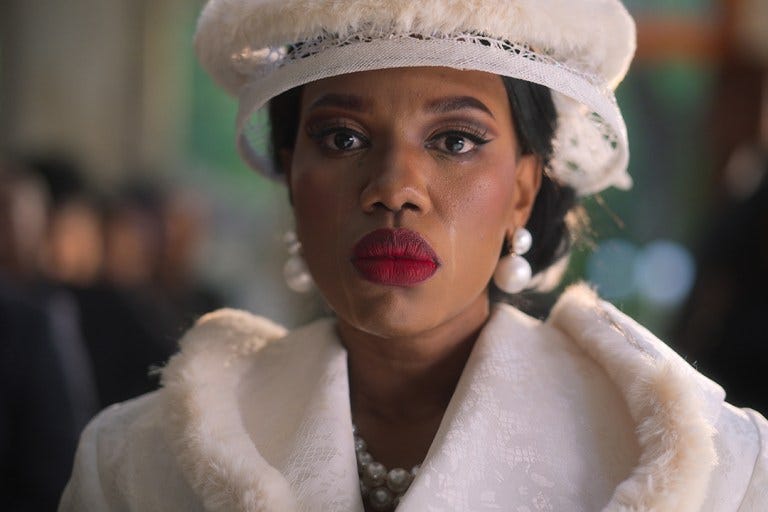
Joyce oh Joyce. It might never have been spelled out before but mothers are the families’ unpaid Public Relations personnel. Always glossing over, rebranding, and repackaging the ills of the home even when they wear them out. I mean, the Ganda have a proverb, “Omwaana omubi avumaganya nnyina," which loosely translates to "Society ridicules the mother of a bad child.”
Maybe Joyce would have jumped ship already, but her “What will people say?” mindset passed down by her mother traps Joyce in a vicious cycle of performative perfectionism and structural enabling. Joyce learned from her mother that image must be prioritized over safety, and that status is valued over sanity.
To think that she would go as far as doing interviews to talk about how as a couple they have so much love to give so they had to bring in a second wife to bear them twins is mad-crazy. Seeing her daughter, Mpume, watching that interview well knowing that her mother is deeply struggling made me think of the many girls who grow into women who curse all men and marriage.
Many people who ridicule the single-mother-family dynamic often overlook the fact that many people, women especially, who hate the idea of marriage grew up in a two-parent household. Heck, if my childhood friend's parents were my own, I too, would hate the idea of marriage because that man made his children and wife see things. He is, in fact, the real-life Jonasi Gomora.
J&J Holdings was a dream for Joyce. She dreamed of a power couple and to her, no one else would define one if it wasn't Jonasi and Joyce. She wanted to be admired. The perfect wife. She latched onto a title that broke her behind the screens. Joyce is not the first. She exemplifies many "GOAT wives" on the internet. One minute they're celebrating an anniversary and in the next they're announcing a divorce. Women like Joyce make girls hate marriage. They see these women glorifying their men only for them to be thrown to the garbage pits.
But Joyce didn't just suffer alone; she became a danger to her children. She forced Mpume and Menzi to smile for the cameras, weaponizing her own children to protect her pride, validating a lie that was actively breaking them. She became a danger to herself, her children, and the women she wanted to inspire.
Psychologist Dr. Ramani Durvasula once said (or often says) that it is a waste of time for you to wait for a Narcissistic partner to change their ways. Joyce saw this firsthand and instead of choosing a clean escape for her and her children, she chose a destructive, fiery end. She forced the “until death do us part" vow to mature.
👑 4. The Grand Architect: Jonasi Gomora (Played by S'dumo Mtshali)
The master manipulator who used his family as currency for his ego.

Someone online said that the mere face of Jonasi triggers them. The sight of him makes her so mad, and while I feel sorry for her, I couldn’t help but laugh. Watching Jonasi is an emotional journey—moving from ignorance to shock, then to disgust, and finally to making peace.
For people who have had a father or a spouse like him and haven’t taken the time to work through their emotions, The Polygamist can be a massive trigger. But for those of us who have seen the likes of him, jumped ship, and done the hard work of healing, Jonasi is a character whose moves can easily be laughed at. As a mental health advocate who has actually dated a man like him, I see him for what he truly is.
To be angry with Jonasi is a complete waste of time. He is like a two-year-old with a total disregard for other people’s emotions. His supreme power is actually just supreme patheticness. A grown billionaire drowning out his daughter's tears by turning up a TV remote isn’t a king—he’s a toddler throwing a high-stakes tantrum because he can’t handle accountability.
Jonasi is a scary and deeply toxic person to involve in your social relational dealings. He sits squarely at the dark intersection of the Dark Triad: driven by grandiose narcissism, calculating with Machiavellian cruelty, and operating with a subclinical psychopathy that shields him from feeling a single ounce of guilt for the wreckage he leaves behind.
To see Jonasi's Dark Triad traits in active motion, you only have to look at how he treats the people closest to him. He does not build genuine relationships; he manages financial transactions and power plays. He treats the mothers of his children like interchangeable software updates—Essie is the outdated version he hides away in the ghetto, Joyce is the premium public-facing interface he uses for status, and Matipa is the shiny new download. He keeps them in a manufactured state of emotional scarcity, feeding them just enough crumbs to keep them fighting each other instead of holding him accountable. His children are the ultimate casualties of this system, viewed merely as extensions of his portfolio. The minute they express independent pain—like his daughter reading that heartbreaking letter—he turns up the TV volume, treating their boundaries as insolence and their trauma as an inconvenience. Even his brother, Magesh, is completely degraded by this chess game. Jonasi weaponized Magesh’s financial dependency to turn him into a professional liar, forcing him to play a fake husband to cover up a secret family. And then there is Lindani. By sleeping with his own daughter's best friend, Jonasi proves that his insatiable ego completely overrides any shred of paternal protection, violating a young girl and shattering his daughter's safe space all at once.
Yet, for all his posturing as an untouchable, traditional patriarch, Jonasi’s ego is incredibly porous. It is made of cheap glass, not steel. He only looks powerful because he meticulously surrounds himself with people whose self-esteem he has already systematically broken. The moment he steps outside of his carefully curated ecosystem of victims, his true cowardice is instantly exposed. Look no further than that magnificent, telling moment when Essie’s toy boy pulled out a gun on him. In a split second, the billionaire grand architect of the Gomora empire vanished. The man who terrified three households was instantly reduced to a stuttering, defensive coward. It proves that a narcissist’s identity relies entirely on perceived dominance. When faced with someone who doesn’t respect his wealth, refuses to play his psychological mind games, and is willing to end him right there, Jonasi completely collapses. He has no real internal strength; he only possesses the power that his enablers allow him to keep.
As a mental health advocate, this is the part where we have to look past the entertainment value of The Polygamist and face the grim reality of real-life Jonasis. Men like him are a walking public health hazard and a direct enemy to fellow men and society at large. They don't just break homes; they poison the future by operating like a generational cancer through the children they break—unless, of course, those children actively do the heavy lifting to heal. Without that deliberate healing, these families produce a devastating blueprint. Because parents are our primary model of love, we subconsciously look for partners in their image. This means Jonasi's daughters are trapped in a cruel paradox: they either grow into fiercely angry women ready to destroy any man they come across out of sheer disgust, or they find themselves running straight into the arms of the exact same toxic archetype their father embodied. His sons face a similar split fate, becoming either completely docile, broken men or mirrors of their father’s monstrous ego. Look no further than Jonasi's own son. He spent his life acting like a spineless coward under his father’s thumb, only to complete the toxic cycle by engaging in a trashy sexual hookup with Lindani at his own father's funeral. The crown of toxicity was passed down perfectly; the son became the very image of the father, proving that without radical psychological intervention, the father's toxic blood will always find a way to flow through the next generation.