It has caught me by surprise that today is the last day of September. I thought we still had another day to see it off but well. Here we are! The end of September also marks the end of the Suicide Prevention Awareness Month – and this is not me saying we shall not talk about it anymore. But before we bid the month farewell, there is something that has sat on my heart for the longest time of my advocacy and I would wish to address it.

This post isn’t just a reflection. It’s a reckoning. It’s born from years of listening to stories whispered in therapy rooms, random conversations with friends/strangers shared in podcast episodes, and carried in the quiet grief of communities who don’t always have the language for what they feel. It’s shaped by the work we do at NABU Network, where healing isn’t a checklist but a journey of reclaiming emotional safety, cultural truth, and spiritual dignity.
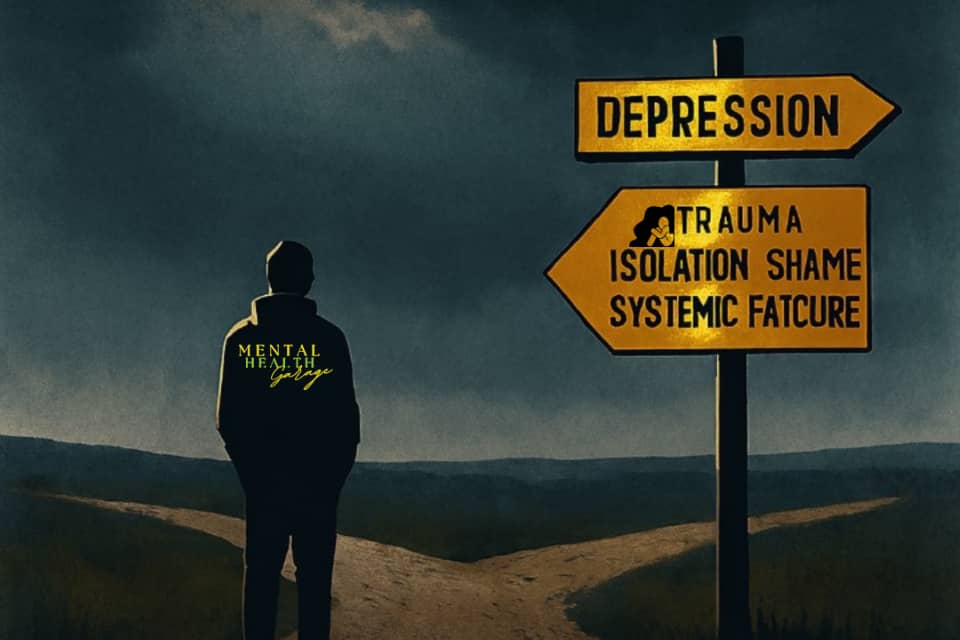
Too often, suicide is flattened into a single narrative: “They were depressed.” And in the moments we find ourselves grappling with the news about someone – celebrity or not – who has died by suicide, the “Depression is real” becomes the headline of every post or comment. But what if that’s not the whole story?
What if someone died by suicide not because they were clinically depressed, but because they were exhausted from performing strength? Because they were drowning in shame, and no one noticed?
Because they were faced with a conflict management? Because they were told to “just pray” when what they needed was to be held, heard, and believed?
We have found ourselves in the era that speaks a lot about mental health and unfortunately for most of us, all we run away with is depression but what if we paused before responding? What if we asked, “What else could be true?”
Suicide is not always about depression. It’s not always about a diagnosis. It’s not always about silence.
Sometimes, it’s about shame. Or exhaustion. Or the quiet ache of not belonging. Sometimes, it’s about being told to pray harder when your soul is already fraying. Sometimes, it’s about carrying the weight of expectations that were never yours to begin with. Sometimes, it’s about being seen as strong for too long.
We’ve been conditioned to look for clinical signs like withdrawal, sadness, and changes in sleep or appetite. And yes, those matter. But what about the signs that don’t fit the checklist?
- The person who’s always smiling, but never shares.
- The one who’s always helping, but never asks for help.
- The one who’s always performing strength, but quietly unraveling.
When we reduce suicide to depression alone, we miss the deeper story. We miss the cultural scripts that teach people to suppress emotion. We miss the spiritual distortions that shame vulnerability. We miss the social conditioning that equates asking for help with weakness.
And in missing all that, we risk missing the person entirely.
This is why our work must go deeper. This is why campaigns like Seasons Change exist… not to offer quick fixes, but to open space for truth-telling, story-sharing, and collective healing.
Because suicide prevention isn’t just about treating depression. It’s about restoring dignity. It’s about making emotional safety a norm, not a luxury. It’s about asking better questions and being brave enough to sit with the answers.
When Conflict Becomes a Crisis: The Story That Shook Us
In the April of 2023, a video surfaced from Kenya that left many of us speechless. It showed a woman, Sharon Njeri also known as Shadodo drinking poison in front of her husband, DJ Brownskin, and their children.
She stood in front of him, poured the substance into a cup, drank it, and collapsed. He filmed the entire ordeal. At one point, he asked the maid to bring milk. But by then, Sharon was too far gone. She died shortly after.

The internet erupted in outrage. “How could he just sit there?” “What a monster!” “Why didn’t he stop her?” “Was he trying to protect himself or punish her?”
We don’t know what happened before that moment. But we do know this: conflict, when mismanaged or left unmanaged, can become a crisis. And in relationships where emotional safety is eroded, people stop reaching for each other. They start performing pain. They start documenting it.
We don’t know Sharon’s full story and neither have I take the time to find out if DJ Brownskin ever told his side of the story. But we can ask:
- Did she hope he would stop her?
- Did she believe he would rush her to the hospital?
- Was this a cry for help that went unanswered?
And we can ask of him:
- Was he too tired to intervene?
- Had the fights become so frequent that he needed evidence?
- Was he emotionally numb, or emotionally trapped?
This isn’t about assigning blame. It’s about naming the emotional disconnection that can grow in relationships when conflict is never truly resolved. When apologies are shallow. When boundaries are ignored. When one person is always performing strength, and the other is always collecting proof.
Conflict management isn’t just about avoiding fights. It’s about managing our own emotional turbulences. It’s about restoring emotional safety. It’s about learning to de-escalate before someone feels like dying is the only way to be heard.
In our communities, we need to stop romanticizing endurance and start teaching emotional intelligence. We need to stop saying “just forgive” “you are not the first” and start asking, “Is this relationship safe?”
Because sometimes, suicide isn’t about depression. It’s about relational despair. It’s about being trapped in a cycle of conflict with no exit. It’s about hoping someone will finally care enough to intervene and realizing they won’t.
Beyond the Diagnosis - What We Miss When We Oversimplify Suicide
When we say “It was depression,” we often mean well. We’re trying to make sense of something that feels senseless. But in doing so, we risk simplifying what is, in truth, a deeply layered experience.
Because suicide isn’t just a clinical outcome. It’s a cultural mirror reflecting what we’ve normalized, what we’ve silenced, and what we’ve failed to make safe.
In many communities, especially faith-based ones, emotional pain is spiritualized. You’re told to “cast your burdens on God,” but never taught how to name those burdens. You’re told “God will never give you more than you can handle,” but what if you’re already drowning?
We miss the impact of spiritual distortion where vulnerability is seen as weakness, and suffering is framed as punishment or a test of our faith. We miss the weight of cultural conditioning where children are taught to suppress their emotions, and adults are praised for endurance over healing. We miss the reality of intergenerational trauma where silence is inherited, and shame is passed down like a family heirloom. And we miss the power of relational dynamics where conflict is chronic, boundaries are blurred, and emotional safety is never modeled.
In these spaces, suicide can become a final act of truth-telling. Not because someone wants to die, but because they no longer know how to live in a world that refuses to hear them.
This is why our advocacy must go beyond diagnosis. We must ask:
- Are our churches emotionally safe?
- Are our families/friends emotionally literate?
- Are our healing spaces culturally resonant?
- Do our cultural beliefs offer space for conversations on emotional burdens?
Because if we’re only treating depression, we’re missing the people who are dying from disconnection, despair, and emotional invisibility.
What Suicide Prevention Must Include
If we’re serious about suicide prevention, we must move beyond diagnosis and into design - designing communities, relationships, and systems that make emotional safety possible.
Because suicide prevention isn’t just about treating depression. It’s about interrupting despair before it becomes deadly. It’s about restoring connection where isolation has taken root. It’s about teaching people how to fight fair, how to feel deeply, and how to heal collectively.
Here’s what that looks like:
1. Emotional Safety as a Standard, Not a Luxury
We must normalize emotional check-ins, not just in therapy rooms, but in homes, churches, and workplaces. The first and last time I spoke to my former employer about mental health, he said “If you ever feel like you cannot function, come and tell me. It is pointless for you to sit at your desk with us thinking you are there yet you aren’t”. I remember crying in the cab in Nairobi when I remembered his words because I knew just how much this does not happen for everyone. We must teach people how to name their feelings without fear of judgment, getting fired from work or spiritual dismissal. We must stop praising silence and start honoring truth.
2. Conflict Resolution That Centers Care
We need to unlearn the idea that conflict is failure. Healthy conflict is a sign of emotional engagement. But when conflict becomes chronic, unresolved, or weaponized, it erodes safety. We must teach de-escalation, active listening, and boundary-setting - not just in couples therapy, but in everyday life.
3. Cultural Resonance in Healing
Mental health tools must speak the language of the people. They must honor lived experience, spiritual nuance, and intergenerational pain. Healing must feel familiar not foreign. That’s why NABU Network exists: to root healing in story, culture, and collective care.
4. Spiritual Clarity, Not Spiritual Shame
Faith should be a refuge, not a reason to hide pain. We must confront the misuse of scripture that shames vulnerability. We must reclaim spiritual spaces as places of emotional honesty, not performance. I think in many instances, we find ourselves in a position that thinks more about the vertical relationship with God and we forget that the horizontal relationships with our fellow human beings in where God resides for we are told that we are created in his image that for whatever we do for each other, we have done it for Him.
5. Collective Responsibility
Suicide prevention is not just the work of therapists. It’s the work of friends who check in. Of clerics who preach Grace. Of families who choose compassion over control. Of communities who make space for grief, rage, and healing.
When Seasons Change, So Must We
We began with a question: Is suicide always about depression? And we’ve journeyed through stories, silence, conflict, and cultural conditioning to arrive at a deeper truth:
Suicide is complex. It’s layered. It’s not always clinical. And it’s never just one thing. It can be about depression. But it can also be about despair, disconnection, and the absence of emotional safety. It can be about conflict that never finds resolution. It can be about spiritual shame, cultural silence, and relational fatigue.
And if we’re going to prevent it, we must be willing to change. We must change how we listen. How we respond. How we teach emotional literacy. How we hold space for pain without rushing to fix it. We must stop asking, “Why didn’t they speak up?” and start asking, “Did we make it safe for them to speak?” We must stop saying, “They should have reached out,” and start asking, “Were we reachable?”
Because healing is not just personal, it’s collective. And prevention is not just medical; it’s relational, cultural, and spiritual.
This is why our Seasons Change T-shirt/Campaign exists - to remind us that pain is not permanent. That silence can be broken. That healing is possible, even after heartbreak.

So if you’re reading this and you’ve felt unseen in your pain: You are not alone. You are not weak. You are not beyond help.
And if you’re reading this and you want to be part of the change: Start with presence. Start with compassion. Start with truth.
Because when seasons change, so must we. And together, we can build a world where emotional safety is sacred, and every life is worth staying for.