The coursework I enjoyed the most in Law School was that of Jurisprudence II. The lecturer, Bwesigye Bwa Mwesigire, fashioned in a way that a student had to choose a topic and make research on it. There was no formal script to follow with it and what made me realize that was when I called all the bright people I knew in the senior years and the commonest question they shot back at me was "do you want to be a philosopher?". Holy smokes! I knew I was doomed but I stayed steady and handled the topic in the way I imagined it should be handled. I wanted to do decolonisation but had no sub topic of focus. The lecturer gave me an idea of creating a subtopic on the Maxims of Equity. He gave me an example and I knew I was set for a smooth ride. I imagined the people in senior years and those who had already left the university had handled the topic and that they would guide me but as I mentioned earlier, my topic was as new as it was anything newly imagined.
If there's any coursework that required me to call my parents, it was that one. Mom and my uncle received numerous calls in that period. My job was to explain to them a Maxim of equity and they would figure out an existing Luganda proverb that would ably replace it. I was supposed to break down the Maxims with a decolonized mind, as a reassurance that Africa can clothe its laws in African fabric and that the Maxims weren't new but rather introduced to us in a language different from the African languages.
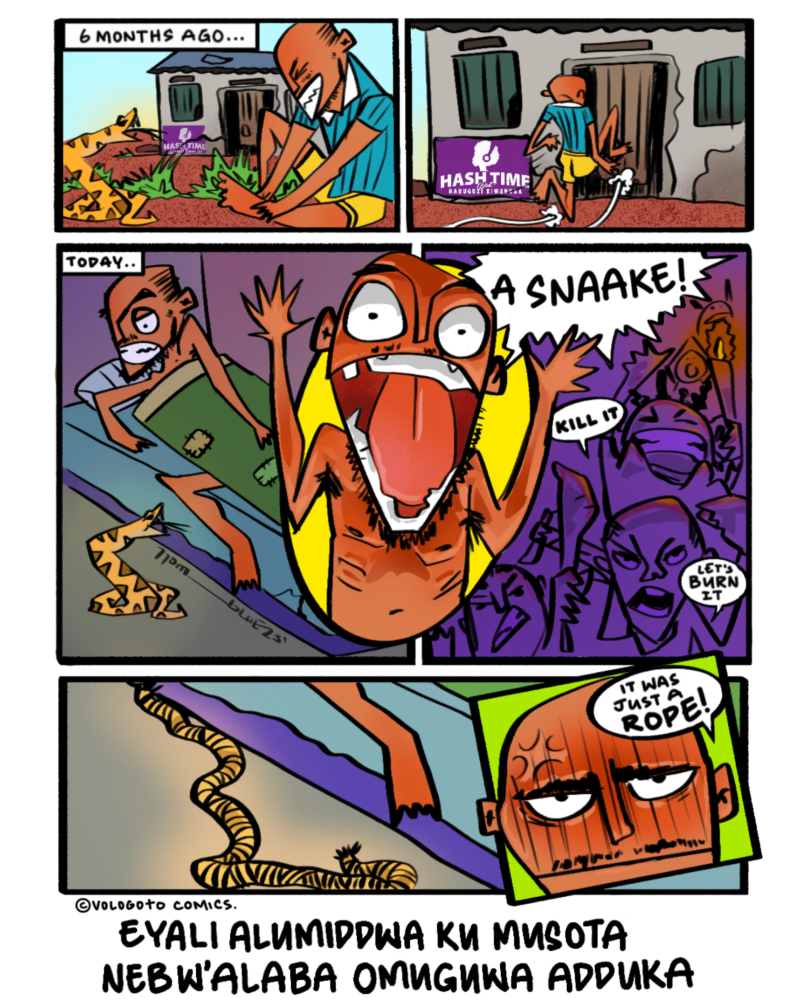
One of the concrete myths on mental health is that mental health is not an African thing. To be honest, even when I was placed on mental health medication as a 15 year old, I only got to hear the word "mental health" when I was 26. A few months ago, I made it to my 32nd year. It has been four years now, and I can assure you that there is no topic I've had to educate myself on, almost on a daily basis, like the one of mental health. I've had to look at the cultural norms and traditional proverbs to understand the meaning beneath their practice and sayings and the one I would like to focus on, in this publication, is the Ganda proverb that prescribes, "Eyali alumiddwa ku musota nebw'alaba omuguwa adduka", which when loosely translated, means that if one has ever been bitten by a snake, one has a proclivity for being startled by the sight of a rope.

I may not have a direct English proverb to equate this to save for the studies on Post Traumatic Stress Disorder (PTSD) or Post Traumatic Stress Syndrome (PTSS) or Post Traumatic Stress Reactions (PTSR).
Oftentimes, what is new to us (Africans in this case), in the mental health realm is the term or diagnosis of that which we have struggled or continue to struggle with, in life. It's common for us to have half awareness of a topic and still dismiss it. The man who swore to me that Africans do not struggle mentally, was the same man going to the bar to drink off his emotional struggles and also the same man who is aware of the existence of Butabika National Referral Mental Hospital. The mental health stigma in Uganda and on the African continent, at large, is so deep rooted that even in face of facts, we are better off denying it. I'm one of those people who had to struggle with PTSD brought about by the different storms of life I've had to weather. I didn't know that there was a name for a struggle as such. 10, 15 years of struggling without single awareness of what I have to carry around.
Post Traumatic Stress Disorder is confirmed to be a mental health disorder often triggered by either experiencing or witnessing a traumatic event. As listed by banyanmentalhealth.com, PTSD symptoms include;
- Always being on guard
- Avoiding places, people, and things that are reminders of the event
- Being easily startled or frightened
- Difficulty experiencing positive emotions
- Difficulty maintaining close relationships
- Difficulty sleeping and concentrating
- Feeling detached from family and friends
- Feeling emotionally numb
- Hopelessness about the future
- Irritability, angry outbursts, or aggressive behavior
- Lack of interest in activities the person once enjoyed
- Memory problems, including not remembering important elements of the traumatic event
- Negative thoughts about oneself, other people, or the world
- Overwhelming guilt or shame
- Recurrent, unwanted memories, dreams, or nightmares of the traumatic event
- Reliving the traumatic event as if it were happening again (flashbacks)
- Self-destructive behavior, such as substance abuse or driving too fast
- Severe emotional distress or physical reactions to something that reminds the person of the traumatic event
- Trying to avoid thinking of the event or things that remind the person of the event
- Withdrawing from loved ones
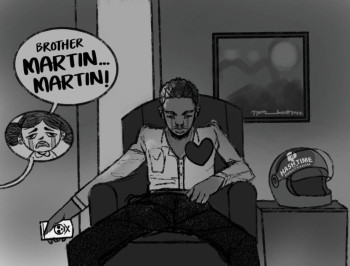
To raise awareness about PTSD, June was set aside as the PTSD Awareness Month and in that spirit, Hash Time with Nabuguzi Kiwanuka, dedicated two weeks to break down sizable and understandable pieces of information to raise awareness on the disorder.
In episodes 111 & 112, Lorna Nakabuye, whom we've since named the resident psychologist of the podcast, answered multiple commonly asked questions, right from "What is PTSD?" to "What are the best self-help strategies or coping mechanisms for individuals with PTSD?"
The month, on my end, came in at the right time because last month, I was on a boda-boda and the rider kept looking back. I found it strange. I first suspected that he could have plotted something against me with some thieves so I held my bag tight. At a certain point after his routine checks, he cautioned me to hold my bag tight. Some kilometers into the ride, he was still looking back and I'd started getting scared. It was like he was running away from someone who may be trailing him. Halfway into the journey he told me that the night before the thieves attacked him and his daily customer but the girl fought back and remained with her bag. He further shared that since that incident, he's grown very suspicious of any other boda rider that tries to ride close to him.
In the same week of that incident, I survived a bathroom accident. I tried to rely on the bathroom wall for support while I scrubbed the sole of my left foot but my hand slid and down, I went. Bathroom accidents are scary. Most of the shared stories don't have survivors. When I told mom, she said so many things an African mother would say. "I have survived" "God has helped me" she said. Days went by and I told her that one of my friends' way of expressing love is by praying for me. I told her that there's a time this friend called when I was having a shower and mom's quick response was, "Let her continue calling, perhaps the prayers will protect you from falling in the bathroom again". She kept bringing it up in different conversations but I think the shock has now subsided because I haven't heard her say anything about it.
These two incidents may not be categorized as a disorder but rather a syndrome or reaction. During the episodes, Lorna advised that one could be a candidate of PTSD when the symptoms persist for over a month.
On a personal level, there are a couple of incidents I've recounted, on the podcast, and they fit rightly so, in the struggles of anyone dealing with Post Traumatic Stress Disorder. As a seven year old, I witnessed my mother being knocked down by a taxi (matatu, for the Kenyans) and for close to 5 years, every time she didn't return home at the expected hour, I knew that that day the taxi had "finished her". There were many times she found crying my little soul out. It also occurred to me that since I was born three months after the death of my father, I was constantly on the edge, making sure that I do not lose the only parent I have.
It is for this specific reason that I found it very important for the psychologist to tackle the subject of PTSD in children.
Given the reckless shootings in Uganda, I've also grown to feel terribly insecure when I'm close to a police officer with a gun because I do not know what may trigger him to shoot whoever is in sight. Right after I confessed this on the podcast, a listener shared the same sentiments, as seen in the attached screenshot.

The best thing the psychologist said during the recording of episodes 111 & 112, was that the best way society can support those dealing with PTSD is by learning, relearning and unlearning.
As I sign off this newsletter, I hope for you to take some time off to use all the free resources available to acquaint yourself with knowledge on PTSD and most importantly resources on how to help someone or even yourself, when faced with the disorder, syndrome or reaction.
For the Love of Life,